Cowles Center for Dance and the Performing Arts Owned by
| Cowles Centre for Dance and the Performing Arts | |
|---|---|
 | |
| Sam Southward. Shubert Theatre | |
| U.S. National Register of Celebrated Places | |
 The Goodale Theater of the Cowles Center for Dance and the Performing Arts | |
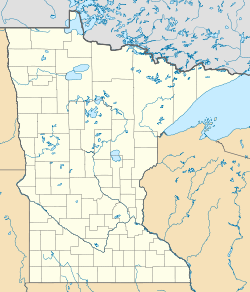
| Show map of Minnesota Evidence map of the United states | |
| Location | 528 Hennepin Artery Minneapolis, Minnesota |
| Coordinates | 44°58′47″North 93°16′23″West / 44.97972°N 93.27306°W / 44.97972; -93.27306 Coordinates: 44°58′47″Northward 93°16′23″West / 44.97972°Due north 93.27306°West / 44.97972; -93.27306 |
| Built | 1910 |
| Builder | Swasey, William Albert; Robinson, J.Fifty. Co., et al. |
| Architectural style | Beaux Arts |
| NRHP referenceNo. | 95001230[1] |
| Added to NRHP | October 31, 1995 |


The Cowles Middle for Dance and the Performing Arts (formerly the Minnesota Shubert Performing Arts and Education Center) is a performing arts eye and flagship for dance in downtown Minneapolis, Minnesota, United States. The Cowles Center was adult as an incubation projection past Artspace Projects, Inc and includes the refurbished 500-seat Goodale Theater (formerly the Sam S. Shubert Theater); the Hennepin Middle for the Arts, habitation to 20 leading trip the light fantastic and performing arts organizations; a country-of-the-art educational activity studio housing a distance learning plan; and an atrium connecting the buildings. The Cowles Center is a catalyst for the cosmos, presentation and didactics of trip the light fantastic toe in the Twin Cities.
Both the Goodale Theater and the Hennepin Center for the Arts (formerly the Minneapolis Masonic Temple) are on the National Register of Historic Places.
The distance learning plan began teaching students in 2002. Using IP videoconferencing technologies, it brings artists into classrooms throughout Minnesota, nationally and internationally, creating two-way interactive, real-time teaching environments.
Original Samuel S. Shubert Theater [edit]
The Shubert Theatrical Company, run past brothers Levi, Samuel, and Jacob, entered the New York theater scene in 1900 and had get the largest theater owning and producing organization in America past 1920.
When Samuel Shubert died in a train wreck in 1905, his brothers memorialized him by naming a few of their new theaters afterwards him. Ii of these new theaters opened on the same solar day in 1910: Saint Paul's Shubert Theater, which became the Fitzgerald Theater in 1994, and The Samuel South. Shubert Theater in Minneapolis, which reopened equally The Cowles Center for Dance and the Performing Arts in September 2011, after a long and dramatic history.
The Samuel South. Shubert Theater was designed by William Albert Swasey (1864–1940). For its time it was a mid-sized house, consisting of 1,500 seats with two shallow balconies. The front of the building had a Classical Revival façade featuring iv pairs of bas-relief columns framing 3 arched windows at the second-story level. As with many of Swasey's other buildings, the decorative elements of the façade were made of glazed terra cotta.
The opening show at Minneapolis' new Samuel S. Shubert Theatre was The White Sister starring Viola Allen. Ticket prices ranged from $2.50 to 50 cents.
Alexander One thousand. "Fizz" Bainbridge, a former printing agent for Buffalo Bill's Wild Due west Show and general managing director for a Chicago producer of touring shows, became the Shubert's manager in 1910, at the historic period of 25.
The Shubert had been conceived as a venue for touring Broadway shows, but those tours stopped in the summertime, leaving the theater empty, so, the Shuberts tasked Bainbridge with creating a resident acting ensemble. The Bainbridge Players became a pop twelvemonth-round attraction. Several of its actors, such as Victory Jory, Gladys George, and Johnny Dilson, went on to successful film careers.
In 1915, The Shubert began to play movies, accompanied by a 40-piece pit orchestra. In 1918 the flu epidemic closed all Minneapolis theaters. The Shubert remodeled; new lights were installed, the orchestra pit was expanded, and the theater was repainted.
Throughout the 1920s the prevalence and popularity of films began to push out alive theater. While the Shubert held on until 1933, it could not withstand the changing of the tides. Bainbridge disbanded his company, and became mayor of Minneapolis from 1933 to 1935.[two]
The Alvin [edit]
The Shubert came dorsum to life as "The Alvin" in 1935, named after its new owner William Alvin Steffes. Steffes added an Fine art Deco marquee and split the phase fourth dimension between movies and touring Broadway shows until December 1940, when the theater went nether for ii months before reincarnating as a burlesque theater.
Despite a burn on July vi, 1941, which necessitated a v-month-long renovation, The Alvin theater kept its doors open as a burlesque theater until 1953. Some of the best known strip-tease artists of the day including Tempest Storm, Processed Barr, and Gypsy Rose Lee performed there. A typical burlesque show offered not only titillation, but entertainment by jugglers, comedians, and variety acts. One of the almost noteworthy of these performers was Dudley Riggs, a comedian juggler who went on to found Dauntless New Workshop, now housed just a few blocks from The Cowles Center.
In November 1953, the Alvin underwent nevertheless another change when the Reverend Russell H. Olson turned the building into the Minneapolis Evangelistic Auditorium. The church building closed only iii years later.
The Academy [edit]
The Shubert came dorsum in 1957 when Ted Mann bought it, converted it into a movie theater, and renamed information technology The University. On July 12, 1957, The University hosted the Minneapolis premiere of Minnesota native Michael Todd's Around the Globe in 80 Days. Todd, who used to exist a candy vendor in the sometime Shubert Theater, attended the opening with his wife, Elizabeth Taylor.
The Academy began to struggle equally suburban multiplexes replaced single-screen houses, and 1983 brought yet another endmost of the theater'southward doors.
Airtight doors and new projects [edit]
In 1987, 25% of reported crimes in downtown Minneapolis were committed on Block East, where the Shubert was located. In an effort to gainsay the increasing crime, the Minneapolis City Council canonical guidelines for a redevelopment project. Yet, the project brought The Shubert nether threat of the wrecking ball.
Block E was razed in 1988 and 1989 except for the Shubert. In 1990, the Heritage Preservation Committee convinced city officials not to annihilate the Shubert unless it proved prohibitively expensive to develop Block E with the theater in place. Salve Our Shubert wrote letters to editors and held candlelight vigils outside the theater. The Shubert was added to the National Annals of Historic places in 1996, leaving Brookfield Development to find a way to contain the Shubert into their Block E proposal.
Artspace Vice President Tom Nordyke had the idea to move the Shubert out of the way, solving the result in a fashion that benefited preservationists, developers, and the arts community. Bakke Kopp Ballou and McFarlin Inc of Minneapolis concluded that the selection of moving a 6-million-pound building a few blocks was, in fact, feasible.
It took twelve days to movement the theater from Block East to its new Hennepin Avenue location in February 1999. At v.eight million pounds, it was the heaviest building ever moved on safe tires, and holds a Guinness Globe Record for this achievement.
The Shubert was likewise large to be moved on city streets, simply the but things between it and its new home were parking lots. Renovation of the building at its new location created The Cowles Eye for the Performing Arts.[three]
Goodale Theater [edit]

Watching Groundbreaker Battle 2008 at Minnesota Shubert'due south month-long Hip-Hop Trip the light fantastic: From the Street to the Land [4]
The refurbished Goodale Theater with 505 seats (216 orchestra level, 289 Grand Tier level) offer guests intimate, unobstructed views of the entire stage with no seat farther than 65 feet from center phase. Each row of seats arcs semi-circularly to face middle phase.
Ornate columns of cherrywood and historic architectural details frame the proscenium curvation. Floors throughout the backstage area are covered with a special linoleum that allows ballet performers to walk from dressing rooms to the stage without removing their toe shoes. The spacious backstage spaces and dressing rooms allow maximum flexible space to support a wide variety of companies and performance needs. The orchestra pit accommodates up to 42 musicians and adds the dimension of live orchestral music. The orchestra pit can likewise exist adjusted to add two additional rows of seating in the business firm. The phase is large enough to provide choreographers with aplenty space in the wings to perform large-scale productions. The stage besides includes a total-size stage house with 52 riggings that tin support extensive and elaborate set designs.
U.Southward. Depository financial institution Atrium [edit]
The master archway to The Cowles Middle houses the box office and information desk, concession space, donor wall, and entrances to the Goodale Theater and The Hennepin Heart for the Arts.
A Labanotation wall art piece inspired by Rites of Spring hangs in a higher place the concession area. Developed by dance artist and theorist Rudolf Laban (1878–1958), Labanotation is a mode of writing downwards dance which is coordinating to the style music notation is a way of writing down music. Labanotation uses symbols to represent points on a dancer'southward body, the direction of the dancer's movements, the tempo, and the dynamics.
Target Educational activity Studio [edit]
The studio was designed specifically for dance with a sprung maple floor, studio lighting and a wall of mirrors. It houses the center's long altitude learning program. Using video conferencing technology, the middle brings artists into classrooms to create two-style, interactive, real-fourth dimension education environments. Thanks to generous funding, the centre is also able to provide gratuitous sessions to Minnesota schools.
Inaugural season [edit]
The Cowles Centre countdown season spanned the fall of 2011 and the spring of 2012 and brought a diverseness of Minnesota dance companies to the same venue. Dance companies which performed in the 2011–12 flavor included:
- Ragamala Trip the light fantastic
- Minnesota Dance Theatre
- Beyond Ballroom Trip the light fantastic toe Company
- Blackness Label Movement
- Zorongo Flamenco
- Native Pride Dancers
- James Sewell Ballet
- Matthew Janczewski'southward Arena Dance
- Stuart Pimsler Dance and Theater
- Katha Dance Theater
- Shapiro and Smith Trip the light fantastic Company
- Zenon Trip the light fantastic toe Company
- Breaking Boundaries Dance Company
- Tu Dance
The inaugural season also included Cantus, and a performance by New York-based dancers Kegwin + Company.[5]
References [edit]
- ^ "National Register Data System". National Register of Historic Places. National Park Service. 2008-04-15.
- ^ The Many Lives of the Schubert Theater
- ^ "Artspace" (PDF). November 2, 1998. Retrieved 2015-04-02 .
- ^ Traudes, Cristof (September 23, 2008). "Shubert goes hip-hop for calendar month-long event". Downtown Journal. Minnesota Premier Publications. Retrieved 2008-x-05 .
- ^ Marianne Combs. "Cowles Eye announces inaugural season". State of the Arts.
External links [edit]
- The Cowles Center
- Artspace United states of america
Source: https://en.wikipedia.org/wiki/Cowles_Center_for_Dance_and_the_Performing_Arts
0 Response to "Cowles Center for Dance and the Performing Arts Owned by"
Post a Comment